


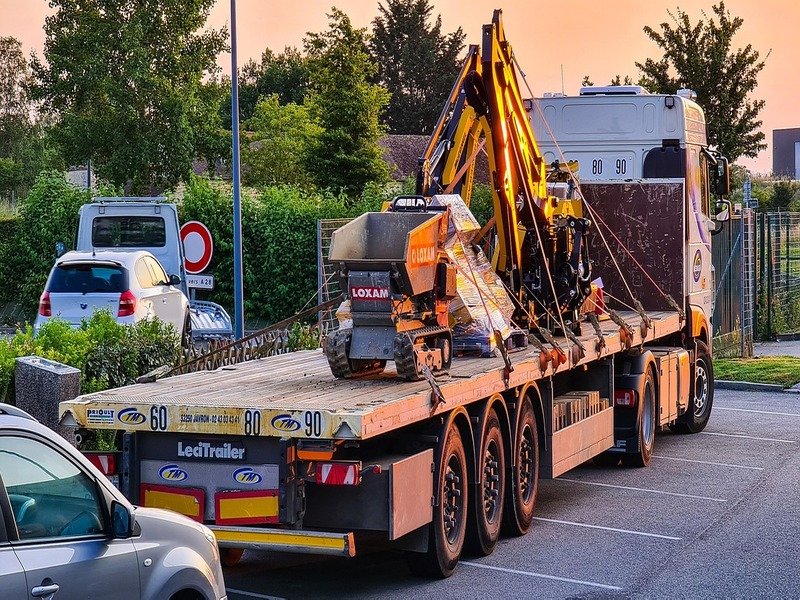
If you’ve ever stood next to a loaded flatbed wondering whether four straps are really enough, you’re asking the right question at the right time — before you pull onto the highway, not after a DOT inspector starts walking your load.
Knowing how to properly secure a load on a flatbed isn’t about memorizing a page of federal code. It’s about understanding a handful of principles — working load limit, tiedown count, and blocking — well enough that you can apply them to whatever ends up on your deck, whether that’s a stack of lumber, a piece of steel, or an oddly shaped machine nobody warned you about. By the end of this guide, you’ll know exactly how flatbed securement rules work, how to apply them to common cargo types, and what mistakes put drivers out of service every single day.
This matters more than most new flatbed drivers realize. During the Commercial Vehicle Safety Alliance’s 2026 International Roadcheck, cargo securement was the designated vehicle inspection focus, and inspectors found 1,724 out-of-service violations tied directly to it. And according to J.J. Keller’s review of 2024 FMCSA enforcement data, the single most common cargo securement citation — cargo not secured to prevent leaking, spilling, blowing, or falling — carried a 99.6% out-of-service rate. In other words, if an inspector writes you up for this one, you are almost certainly not driving away without fixing it first.
Why Load Securement Isn’t Just a Compliance Checkbox
It’s easy to think of securement rules as paperwork — something an inspector checks off, not something that actually matters. That’s the wrong way to think about it.
A load that shifts at highway speed can pull a trailer sideways, throw off your braking, or come off the deck entirely. Steel coils, pipe, and machinery don’t bounce harmlessly when they let go — they become projectiles. And even lighter freight like lumber or building materials can do real damage to the vehicles behind you if a strap fails or a tarp comes loose.
There’s also a financial angle. An out-of-service order means your truck sits until the problem is fixed, which means missed appointments, wasted hours, and sometimes a fine on top of the delay. The FMCSA’s cargo securement rules exist under 49 CFR Part 393, Subpart I, and they apply to virtually every commercial motor vehicle hauling cargo — flatbeds included.
Learning how to properly secure a load on a flatbed protects three things at once: the people around you on the highway, your own DOT record, and your paycheck.
The Rules Behind Flatbed Load Securement
Before you can apply the rules to a real load, you need to understand the two numbers that drive nearly every securement decision: working load limit and tiedown count.
Working Load Limit (WLL)
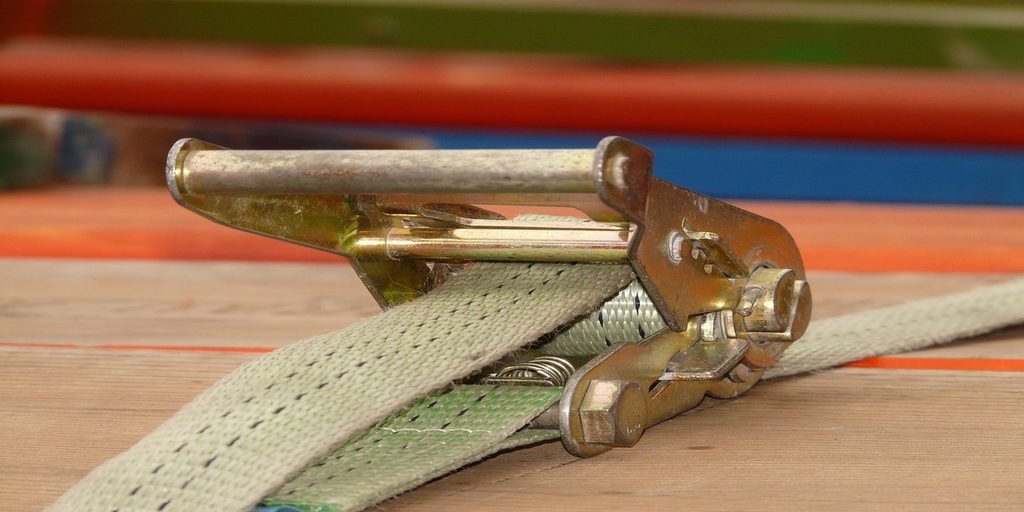
Working load limit is the maximum force a piece of securement equipment — a strap, chain, or binder — is rated to handle. Every rated strap or chain has a WLL stamped or tagged on it, and that number is the one that matters, not the strap’s breaking strength.
FMCSA’s aggregate WLL rule requires that the combined working load limit of every tiedown securing a piece of cargo equal at least half the weight of that cargo. So if you’re hauling a 20,000-pound load, your straps or chains need to add up to at least 10,000 pounds of aggregate WLL.
A standard 4-inch ratchet strap typically carries a WLL in the neighborhood of 5,400 pounds, though this varies by manufacturer and should always be confirmed on the tag. Do the math and you’ll see that four of those straps gives you roughly 21,600 pounds of aggregate WLL — enough to legally secure that 20,000-pound load, with a little room to spare.
One detail trips up a lot of drivers: a tiedown assembly is only as strong as its weakest link. If a 5,400-pound strap is attached to a hook rated for 4,700 pounds, the whole assembly is rated at 4,700 pounds, not 5,400. Check every component, not just the webbing.
Minimum Number of Tiedowns
Working load limit tells you how much capacity you need. The tiedown count rule tells you the minimum number of individual straps or chains you’re required to use, regardless of the math above.
Under the general FMCSA rule:
- Cargo 5 feet or less in length and 1,100 pounds or less needs one tiedown.
- Cargo 5 feet or less but heavier than 1,100 pounds, or cargo between 5 and 10 feet regardless of weight, needs two tiedowns.
- Cargo longer than 10 feet needs two tiedowns for the first 10 feet, plus one additional tiedown for every 10 feet (or fraction of 10 feet) after that.
That means a 35-foot piece of freight needs four tiedowns at minimum. A 25-foot load needs four as well — two for the first 10 feet, then one more for each additional 10-foot segment or fraction of one.
Both rules apply at the same time. You need enough tiedowns to meet the count requirement, and those tiedowns together need enough aggregate WLL to meet the weight requirement. Meeting one without the other still leaves you out of compliance.
A Quick Working Example
Say you’re hauling a 30-foot piece of steel fabrication weighing 18,000 pounds.
Tiedown count: Two for the first 10 feet, plus two more for the remaining 20 feet, for a total of four tiedowns minimum.
Aggregate WLL: You need at least 9,000 pounds of combined WLL (half of 18,000). Four 4-inch straps at roughly 5,400 pounds each gives you about 21,600 pounds — well over the minimum.
In this case, four straps satisfies both requirements. But if the load were heavier or your straps were rated lower, you might meet the tiedown count and still fail the WLL math, which is exactly the kind of gap that shows up during a roadside inspection.
Choosing the Right Equipment for the Job
Not every load calls for the same securement method. Matching the equipment to the cargo is half the job.
Straps
Straps — usually 2-inch or 4-inch synthetic webbing with a ratchet mechanism — are the most common flatbed securement tool for general freight, lumber, packaged materials, and lighter machinery. Ratchet straps let you apply and adjust tension precisely, which matters because cargo can settle or shift slightly after the first few miles.
Inspect straps before every use. Look for cuts, fraying, UV damage, burn marks from friction, and stitching that’s pulling loose. A strap doesn’t have to be torn in half to fail — a compromised strap can lose a significant percentage of its rated capacity long before it visibly breaks.
Chains and Binders
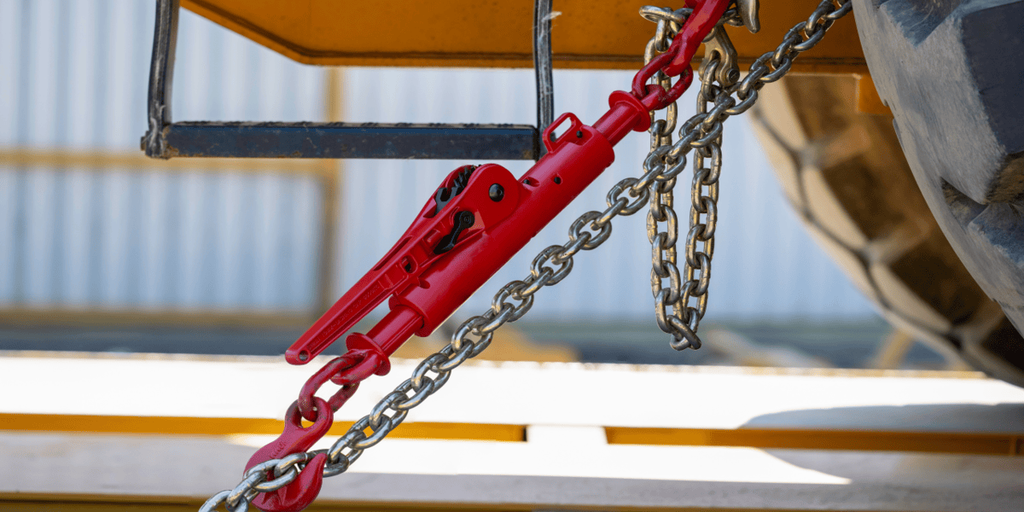
Heavier cargo — steel, machinery, farm equipment, coils — typically calls for chains and binders instead of straps. Chains are matched to a specific grade (Grade 70 and Grade 80 are common in trucking), and each grade carries its own WLL rating that must never be assumed or guessed. Binders tighten the chain and lock it in place; ratchet binders are generally considered easier to control than lever binders, which can release suddenly if not operated correctly.
Edge and Corner Protection
Any tiedown that runs across a sharp edge — a piece of steel, a stack of lumber, a machine frame — needs edge protection where it makes contact. Without it, the strap or chain can be cut, weakened, or abraded during transit, which quietly reduces the WLL you’re counting on. Edge protectors are inexpensive compared to the cost of a securement failure, and FMCSA regulations specifically require them wherever a tiedown would otherwise be subject to abrasion or cutting.
Step-by-Step: How to Properly Secure a Load on a Flatbed
Here’s how experienced flatbed drivers approach securement in practice, from the moment the load goes on the deck to the moment they’re ready to roll.
1. Inspect the trailer bed and anchor points first. Before cargo goes on, check your rub rails, stake pockets, and chain points for damage. A cracked or bent anchor point won’t hold rated capacity no matter how good your straps are.
2. Confirm the weight and dimensions of the load. You can’t calculate tiedown count or aggregate WLL without knowing what you’re actually hauling. Get accurate weight and length figures before you start strapping.
3. Position the cargo correctly on the deck. Center the load side to side, and distribute weight so you’re not overloading one axle group. Uneven placement can affect handling even before you consider securement.
4. Select equipment rated for the weight. Match your straps or chains to the load using the WLL and tiedown count rules above. When you’re close to the minimum, round up rather than down.
5. Apply tiedowns at proper anchor points. Hook straps or chains to rated anchor points — stake pockets, rub rails, or chain points — not to random trailer components that were never designed to hold cargo.
6. Tension evenly and check for even contact. Tighten each tiedown so the cargo can’t shift, but avoid over-tensioning to the point of damaging the freight. Uneven tension on one side can actually pull cargo out of position.
7. Install edge protectors wherever a tiedown crosses a sharp edge. Do this before final tensioning, not after.
8. Secure any excess strap length. Loose strap ends can flap, wear against the cargo, or become a hazard. Coil and tie off anything hanging free.
9. Do a final walkaround. Check every tiedown, every edge protector, and the overall load for anything that looks loose, twisted incorrectly, or out of place before you pull out.
10. Recheck within the first 50 miles. Cargo can settle during the first stretch of driving even when it was properly secured at the dock. FMCSA-informed best practice — echoed across the industry — is to check your load again shortly after departure, then periodically throughout the trip.
Securing Different Types of Flatbed Cargo
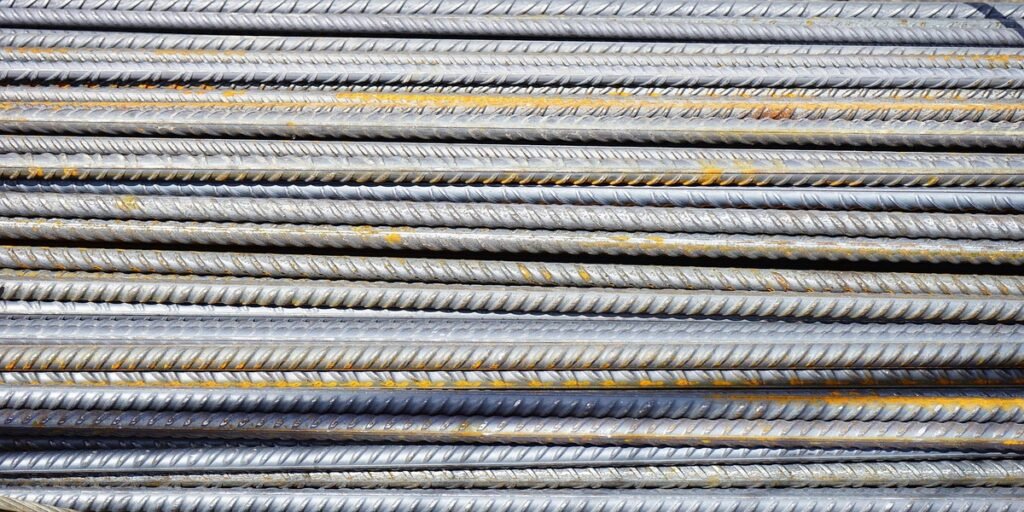
The general rules above apply to almost everything, but a few common flatbed commodities have their own quirks worth knowing.
Lumber and Packaged Building Materials
Bundled lumber, plywood, and similar building products are generally secured under the general cargo rules as long as they’re properly unitized — meaning banded or strapped together as a single article. Loose, unbundled lumber has to be treated as individual pieces, which usually means far more tiedowns than a properly bundled load would need. If a shipper hands you an unbundled stack, that’s worth flagging before you leave the yard.
Steel Coils and Heavy Machinery
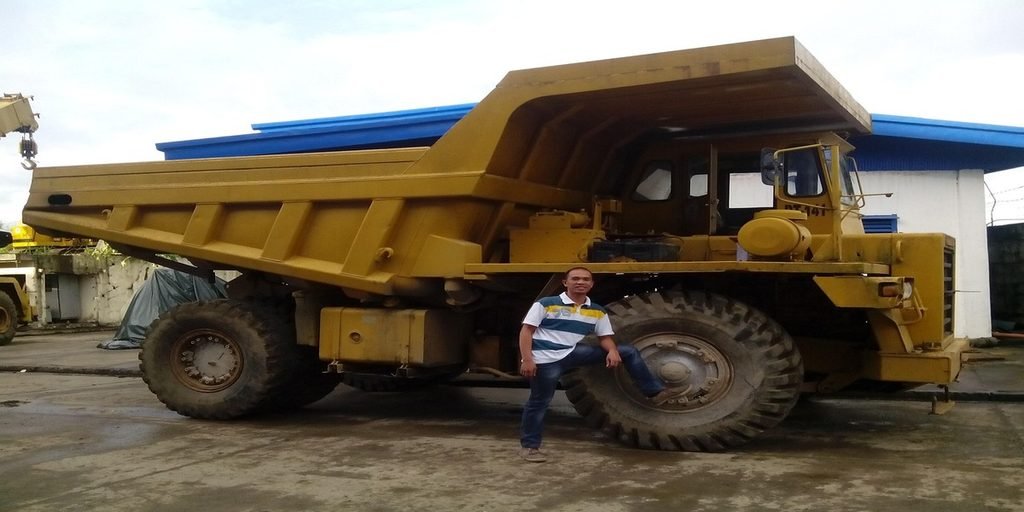
Metal coils weighing 5,000 pounds or more fall under FMCSA’s commodity-specific securement rules rather than the general rules, with additional requirements around coil orientation and chocking to prevent rolling. Heavy machinery and equipment over 10,000 pounds — think excavators, loaders, and similar rolling equipment — generally require a minimum of four independent tiedowns regardless of the machine’s length, along with the aggregate WLL math applied on top.
Pipe and Round Cargo
Cylindrical cargo has a specific failure mode: it rolls. Chocks, cradles, or nested stacking arrangements are essential for pipe and similar round freight, in addition to standard tiedowns. An inspector who sees round cargo with no rolling restraint is going to flag it immediately, regardless of how tight the straps look.
Mistakes That Get Flatbed Drivers Placed Out of Service
Most cargo securement violations don’t come from drivers who don’t care. They come from small assumptions that turn out to be wrong.
Assuming the strap is still good. A strap that looks fine from a few feet away can have internal fiber damage or a compromised WLL from months of wear. If you can’t remember the last time you replaced it, that’s worth a closer look.
Meeting tiedown count but not aggregate WLL, or vice versa. These are two separate requirements. Satisfying one doesn’t automatically satisfy the other.
Skipping edge protection. This is one of the most commonly cited violations on flatbed loads specifically, because the visibility of open-deck cargo makes it easy for inspectors to spot.
Anchoring to the wrong point. Not every part of a trailer is a rated anchor point. Using an unrated component can mean your entire securement system fails the WLL requirement even if the strap itself is rated correctly.
Skipping the recheck after the first miles. Cargo settles. A load that was tight at the dock can loosen slightly once it’s been driven a few miles, especially over rough pavement.
Underestimating unbundled or irregular cargo. Loose materials and oddly shaped freight often need more securement than a driver expects, not less.
Checking Your Load Once You’re Rolling
Securing the load correctly at the start is only half the job. Federal cargo securement rules are enforced at any point during a trip, not just at the point of departure, which is why periodic checks matter.
A reasonable habit, and one echoed across FMCSA guidance and industry best practice, is to check your securement within the first 50 miles of departure, then again at each fuel stop or rest break. This is also a good moment to fold into your broader trip-planning routine — the kind of habit that separates a driver who’s just moving freight from one who’s actually managing a load from pickup to delivery. If you’re still building those broader on-road habits, Truck Mastery’s guide to the best truck driving techniques for beginners covers pre-trip inspection discipline and the kind of situational awareness that makes catching a loose strap second nature.
Final Thoughts
Learning how to properly secure a load on a flatbed comes down to understanding a few core numbers — working load limit, tiedown count, and aggregate WLL — well enough to apply them to whatever shows up on your deck. The equipment matters, the technique matters, but the math is what keeps you out of an out-of-service order and, more importantly, keeps your cargo where it belongs at 65 miles per hour.
If you’re new to flatbed work or specialized freight in general, this is exactly the kind of skill that separates drivers who just haul freight from drivers who build a reputation for doing it right. For a broader look at how flatbed and other specialized freight fit into the bigger picture of a trucking career, check out Truck Mastery’s guide on how to start a trucking career.
FAQ
How many straps do I need to secure a load on a flatbed?
It depends on both the length and weight of the cargo. FMCSA’s minimum is one tiedown for cargo under 5 feet and 1,100 pounds, two tiedowns for cargo up to 10 feet, and one additional tiedown for every 10 feet beyond that. You also need enough combined working load limit across those tiedowns to equal at least half the cargo’s weight — whichever requirement demands more straps is the one you follow.
What is the working load limit rule for flatbed straps?
The aggregate working load limit of all tiedowns securing a piece of cargo must equal at least 50% of the cargo’s total weight. This is separate from the minimum tiedown count rule, and both requirements have to be satisfied at the same time.
How often should I check my load while driving?
A common practice is to check your securement within the first 50 miles of a trip, since cargo can settle after loading, and then periodically at fuel stops or rest breaks throughout the haul.
What happens if my load fails a DOT inspection?
Many cargo securement violations carry high out-of-service rates. According to J.J. Keller’s review of 2024 FMCSA enforcement data, the most frequently cited securement violation carried a 99.6% out-of-service rate, meaning the truck isn’t moving again until the problem is corrected.
Do straps or chains work better for flatbed loads?
It depends on the cargo. Straps are generally used for lumber, packaged goods, and lighter machinery, while chains and binders are typically reserved for heavier freight like steel, coils, and large equipment. The right choice comes down to the weight, shape, and sensitivity of what you’re hauling.






3 Responses