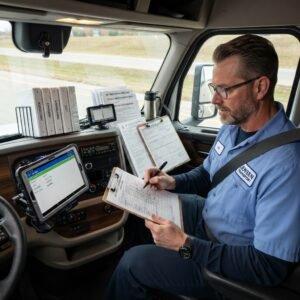
Published: September 2026 | Reading Time: 8 minutes | Category: Owner-Operator Tips
One of the biggest challenges owner-operators face is finding consistent, profitable freight loads. Without a steady stream of loads, your truck sits idle—costing you money every day. This comprehensive guide reveals 7 proven strategies to find quality freight and keep your business thriving.
📋 Quick Navigation
- Digital Freight Marketplaces
- Build Broker Relationships
- Direct Shipper Connections
- Industry Networks
- Social Media Groups
- Dispatcher Services
- Diversify Your Load Sources
Why Finding Freight Matters for Owner-Operators
As an owner-operator, your income directly correlates to truck utilization. Unlike company drivers, you don’t have a dispatcher assigning loads—you’re responsible for filling your own schedule. Finding quality freight efficiently can mean the difference between breaking even and building wealth through your business.
The key is developing a diversified freight-finding strategy. Relying on a single source is risky. By implementing multiple channels, you’ll maintain consistent loads, negotiate better rates, and weather industry downturns.
1. Master Digital Freight Marketplaces
Digital freight marketplaces are the backbone of modern load procurement for owner-operators. These platforms connect carriers directly with shippers and brokers, giving you access to hundreds of loads daily.
Top Freight Marketplaces to Consider:
- DAT (Dial-a-Truck) – The largest digital freight network with over 300,000 active carriers
- Freight Match – Real-time load matching with detailed shipment information
- Convoy – Technology-focused platform with transparent pricing and direct shipper connections
- Loadsmart – Automated pricing and quote system for quick decision-making
- Amazon Relay – Consistent Amazon-generated loads (requires account approval)
- Uber Freight – Quickly growing platform connecting carriers to shippers
✓ Pro Tip: Don’t limit yourself to just one marketplace. Each platform has different brokers and shippers, so subscribing to 3-4 major ones significantly increases your load options.
How to Maximize Marketplace Results:
- Set up instant alerts for loads matching your preferred lanes and rates
- Build ratings and reviews on each platform—higher-rated carriers get first access to premium loads
- Check platforms multiple times daily; quality loads disappear quickly
- Use filters strategically (equipment type, lane, weight, hazmat capability)
2. Build Strong Relationships with Freight Brokers
While digital marketplaces are convenient, personal relationships with freight brokers often yield the best loads and rates. Brokers who know and trust you will prioritize your truck for high-margin freight.
Developing Broker Partnerships:
- Be professional and reliable – Always show up on time, communicate proactively, and deliver safely
- Keep direct contact info – Get phone numbers and emails from brokers, not just marketplace interactions
- Ask for referrals – Satisfied brokers will recommend you to others in their network
- Share your availability – Let brokers know your preferred lanes and when you’re available
- Negotiate rates fairly – Be reasonable; good brokers remember owner-operators they can work with consistently
✓ Quick Win: After completing a load, send a thank-you message to your broker. This simple gesture builds loyalty and makes them more likely to offer you their best future loads.
3. Establish Direct Shipper Relationships
Cutting out the middleman is one of the most profitable strategies in trucking. Direct shipper relationships often provide better rates, more frequent loads, and greater load stability.
How to Find and Connect with Shippers:
- Identify industries relevant to your equipment (manufacturing, retail, agriculture, etc.)
- Research local and regional companies that frequently ship products
- Visit industrial parks and logistics hubs in your preferred operating areas
- Cold call or visit logistics/shipping departments with a professional pitch
- Ask existing customers for referrals to other shippers
- Attend industry trade shows and networking events
Direct shipper relationships typically result in repeat loads, which reduces deadhead (empty) miles and increases profitability. Even a single reliable shipper providing 2-3 loads weekly can dramatically improve your bottom line.
4. Leverage Industry Networks and Associations
The trucking industry has strong professional networks where owner-operators share information, opportunities, and connections. Tapping into these communities is invaluable.
Key Networks to Join:
- Owner-Operator Independent Drivers Association (OOIDA) – Advocacy and networking for owner-operators
- American Trucking Association (ATA) – Industry-wide association with membership benefits
- Regional Trucking Associations – Local chapters often host meetings with brokers and shippers
- Industry-Specific Groups – Flatbed associations, tanker groups, refrigerated carrier networks, etc.
These associations often host networking events where you can meet brokers and shippers directly. Additionally, member directories and job boards provide load-finding resources exclusive to members.
5. Use Social Media and Online Communities
Trucking communities on social media and forums have exploded over the past few years. These platforms are goldmines for finding freight opportunities and getting industry advice.
Top Platforms for Owner-Operators:
- Facebook Groups – Groups like “Owner Operator Truckers Network” and “Truckers for Hire” post loads daily
- Reddit – r/Truckers has an active community sharing load recommendations and industry tips
- LinkedIn – Connect with logistics professionals and follow trucking companies for job postings
- TikTok and YouTube – Follow trucking channels for industry insights and networking
✓ Smart Strategy: When posting in online communities asking for load leads, include your preferred lanes, equipment type, and contact information. Active members often have extra capacity and appreciate referrals.
6. Partner with Dispatcher Services
Some owner-operators prefer delegating the load-finding responsibility to professional dispatchers who work on commission. This can be particularly useful if you prefer to focus solely on driving.
About Dispatcher Services:
- Dispatchers search for loads and negotiate rates on your behalf
- They typically take 5-15% commission on each load
- Best for owner-operators wanting to minimize administrative work
- Good dispatchers have broker relationships and access to exclusive loads
Important: Only hire reputable dispatchers with strong references. Interview multiple candidates and check their success rate with other owner-operators before committing.
7. Diversify Your Load Sources for Stability
Never rely on a single freight source. The most successful owner-operators combine all the strategies above into a diversified load-finding portfolio.
Building Your Diversification Strategy:
- Marketplace Balance – Use 3-4 digital freight platforms simultaneously
- Broker Mix – Develop relationships with 5-10 brokers across different industries
- Shipper Focus – Target 2-3 reliable shippers for repeat business
- Network Participation – Actively maintain relationships with industry associations and online communities
- Load Type Flexibility – Be willing to take various load types (full loads, partial loads, dedicated routes)
✓ The Bottom Line: When one source slows down—which happens seasonally or cyclically—your other sources keep you moving. This stability is what separates thriving owner-operators from struggling ones.
Conclusion: Take Action Today
Finding consistent, profitable freight as an owner-operator isn’t luck—it’s a combination of strategy, relationship-building, and smart use of available resources. The seven strategies outlined in this guide have helped thousands of owner-operators build successful, sustainable trucking businesses.
Your action plan should include:
- Sign up for 3-4 digital freight marketplaces this week
- Identify 5 freight brokers in your target lanes and reach out
- Research 10 local shippers and schedule outreach calls
- Join at least one professional trucking association
- Connect with online communities relevant to your equipment type
- Commit to evaluating and refining your strategy quarterly
The most successful owner-operators don’t wait for opportunities—they create them. By implementing these seven proven methods, you’ll transform your freight-finding process from chaotic to strategic, ensuring your truck stays profitable and your business keeps growing.
About This Guide
This article is based on industry best practices and proven strategies used by successful owner-operators nationwide. Conditions vary by region, season, and market, so adapt these strategies to your specific situation and equipment type.