Running an independent trucking business as an owner operator offers freedom and financial potential, but it also comes with significant responsibility. Unlike traditional employees, owner operators must navigate a complex landscape of federal regulations, state requirements, insurance obligations, and tax responsibilities. Failing to maintain proper compliance can result in hefty fines, loss of operating authority, or even the shutdown of your business.
This comprehensive guide covers the essential compliance and operational requirements every owner operator needs to understand and implement. Whether you’re just starting your independent trucking career or looking to strengthen your current operations, mastering these fundamentals will help you run a more professional, profitable, and legally compliant business.
Understanding DOT Compliance Requirements
The Department of Transportation (DOT) sets the regulatory framework for all commercial trucking operations in the United States. As an owner operator, you must comply with Federal Motor Carrier Safety Administration (FMCSA) regulations regardless of whether you’re operating independently or leasing to a carrier.
Obtaining Your DOT Number
Your DOT number is your federal identification for commercial trucking operations. You must register with the FMCSA and obtain your USDOT number before operating commercially. This number is required on your vehicle, marketing materials, and all official correspondence. Registration takes approximately 7-10 business days and must be renewed every two years.
Motor Carrier (MC) Authority
If you plan to operate for hire—meaning you’ll transport cargo for compensation—you need Motor Carrier Authority. This authority demonstrates that you meet federal safety standards and have appropriate insurance coverage. Operating without proper MC authority is illegal and can result in significant fines, impoundment of your vehicle, and suspension of your operating rights.
Hours of Service (HOS) Regulations
Federal Hours of Service rules limit how many hours drivers can work and require mandatory rest periods. These regulations exist to prevent driver fatigue-related accidents. Owner operators must maintain electronic logging devices (ELDs) to record driving and off-duty time. Violations can result in fines of up to $16,000 per violation and potential disqualification from operating.
Essential Insurance Coverage for Owner Operators
Insurance is non-negotiable for owner operators, and carrying inadequate coverage can bankrupt your business. Understanding your insurance needs is crucial for financial protection.
Commercial Auto Liability Insurance
This is your primary coverage and is legally required. It covers bodily injury and property damage you cause to third parties. Minimum coverage varies by cargo type, but federal minimums start at $750,000 for general freight. Specialized cargo like hazmat or passengers requires higher limits.
Cargo Insurance
Cargo insurance protects the goods you’re transporting. This coverage is typically required by shippers and brokers. It covers damage, theft, or loss of cargo during transit. Most owner operators carry between $100,000 and $1 million in cargo coverage.
Physical Damage Coverage
This covers damage to your own truck from collisions, theft, vandalism, and weather events. While not legally required, it’s essential protection for your largest business asset. Maintenance of your truck directly impacts your ability to generate income.
Additional Coverage Considerations
Bobtail insurance covers your truck when it’s not under load. General liability insurance protects against non-vehicle-related accidents. Workers’ compensation insurance is required if you hire employees. Consult with an insurance agent experienced in trucking to ensure you have comprehensive coverage.
Tax Obligations and Record-Keeping
Owner operators face unique tax challenges that require meticulous record-keeping and strategic planning.
Business Structure Selection
Choosing between sole proprietorship, LLC, S-corporation, or C-corporation impacts your tax liability and personal liability protection. Many owner operators form an LLC for liability protection while maintaining pass-through taxation. Consult a tax professional to determine the best structure for your situation.
Quarterly Estimated Taxes
Unlike traditional employees, you don’t have taxes withheld from your income. You must make quarterly estimated tax payments to the IRS. Failure to pay estimated taxes results in penalties and interest charges.
Deductible Expenses
Keep detailed records of all business expenses, including fuel, maintenance, repairs, insurance premiums, truck payments, tolls, parking, and meals while on the road. Self-employment tax is typically 15.3% of your net earnings, but your business deductions reduce your taxable income significantly.
Maintaining Accurate Records
Use dedicated accounting software to track income, expenses, mileage, and vehicle maintenance. This documentation is essential during tax season and critical if audited by the IRS. Digital record-keeping systems make it easier to categorize expenses and generate reports.
Vehicle Maintenance and Safety Compliance
Your truck is your business tool, and proper maintenance is both a compliance requirement and a smart business investment.
Pre-Trip Inspections
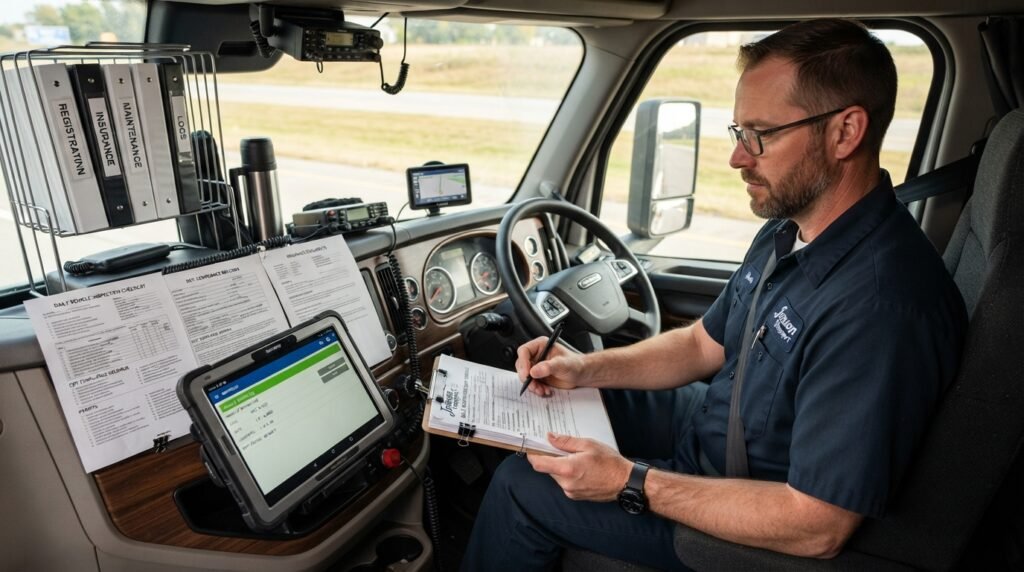
Federal regulations require vehicle inspections before operation. Inspect brakes, tires, lights, coupling devices, and safety equipment. Document these inspections in writing. These inspections prevent accidents and demonstrate compliance if audited.
Maintenance Records
Keep detailed records of all maintenance performed on your vehicle. Regular maintenance extends your truck’s lifespan, improves fuel efficiency, and demonstrates responsible operation practices. Document oil changes, tire rotations, inspections, and major repairs.
Annual Commercial Vehicle Safety Inspections
Have your truck inspected annually by a certified mechanic. This ensures your vehicle meets federal safety standards and reduces breakdowns that interrupt service and damage your reputation.
Establishing Professional Operating Procedures
Professional operations build client relationships and reduce compliance risks.
Permit and Licensing Requirements
Maintain current commercial driver’s licenses and endorsements. Keep permits current for oversize loads, hazmat, or specialized cargo. Track renewal dates to prevent lapses.
Documentation Standards
Carry proof of insurance, vehicle registration, current CDL, medical examination certificate, and hours of service records. Shippers and brokers expect professional documentation and on-time performance.
Communication Systems
Implement reliable communication with dispatchers and customers. Use GPS tracking and electronic logging devices. Modern technology improves accountability and provides documentation of your operations.
Building a Compliance Monitoring System
Successful owner operators implement systems to track compliance requirements.
Regulatory Calendar
Create a calendar tracking registration renewals, insurance policy dates, medical examinations, and inspection deadlines. Missing these dates creates compliance gaps.
Performance Metrics
Monitor your safety record, on-time delivery rate, and customer satisfaction scores. These metrics demonstrate your professionalism to brokers and shippers and identify areas for improvement.
Professional Development
Stay informed about regulatory changes by subscribing to industry updates and participating in owner operator associations. Regulations change regularly, and staying current protects your business.
Conclusion
Success as an owner operator requires balancing operational efficiency with strict compliance requirements. By understanding DOT regulations, maintaining adequate insurance, managing taxes strategically, and implementing professional operating procedures, you create a strong foundation for a sustainable business.
Compliance isn’t just about avoiding penalties—it’s about building a professional reputation, protecting your assets, and establishing the credibility that leads to better-paying loads and long-term client relationships. Invest time in these fundamentals, and your trucking business will thrive for years to come.