


Last updated: September 11, 2026
Quick Answer: To grow a trucking business with one truck, you must first maximize the profitability of your existing equipment before taking on the debt of a second vehicle. This requires calculating your exact cost per mile, transitioning away from cheap spot-market freight to direct shipper relationships, aggressively reducing operational expenses, and building a cash reserve equal to at least two months of operating costs.
Key Takeaways:
- Know your numbers: Track every fixed and variable expense to determine your true cost per mile.
- Prioritize profit over gross revenue: A $3,000 load that costs $2,800 to run is worse than a $2,000 load that costs $1,200 to run.
- Reduce empty miles: Deadhead miles burn fuel without generating income; plan round trips carefully.
- Build direct relationships: Shift from public load boards to direct freight from shippers and trusted brokers.
- Diversify your base: Never let a single customer make up more than 25% of your total revenue.
- Save before scaling: Accumulate heavy cash reserves before purchasing a second truck.
- Systematize operations: Use software to track maintenance, dispatching, and invoicing before adding complexity.
Ninety percent of new trucking companies fail within their first year, and the most common reason is not a lack of freight, it is a lack of financial discipline. Many owner-operators believe the fastest way to make more money is to buy a second truck as quickly as possible. However, adding equipment before your current operation is highly profitable simply multiplies your expenses and accelerates your path to bankruptcy.
Learning how to grow a trucking business with one truck is about mastering the fundamentals: controlling costs, securing better freight, and managing cash flow. Only when your single truck is operating like a well-oiled, highly profitable machine should you consider expanding your fleet.
Start by Knowing What Your Truck Really Makes
You cannot grow a trucking business with one truck if you do not know exactly how much it costs to operate it. Growth requires predictable profit, and profit can only be calculated when you track every single expense down to the penny.
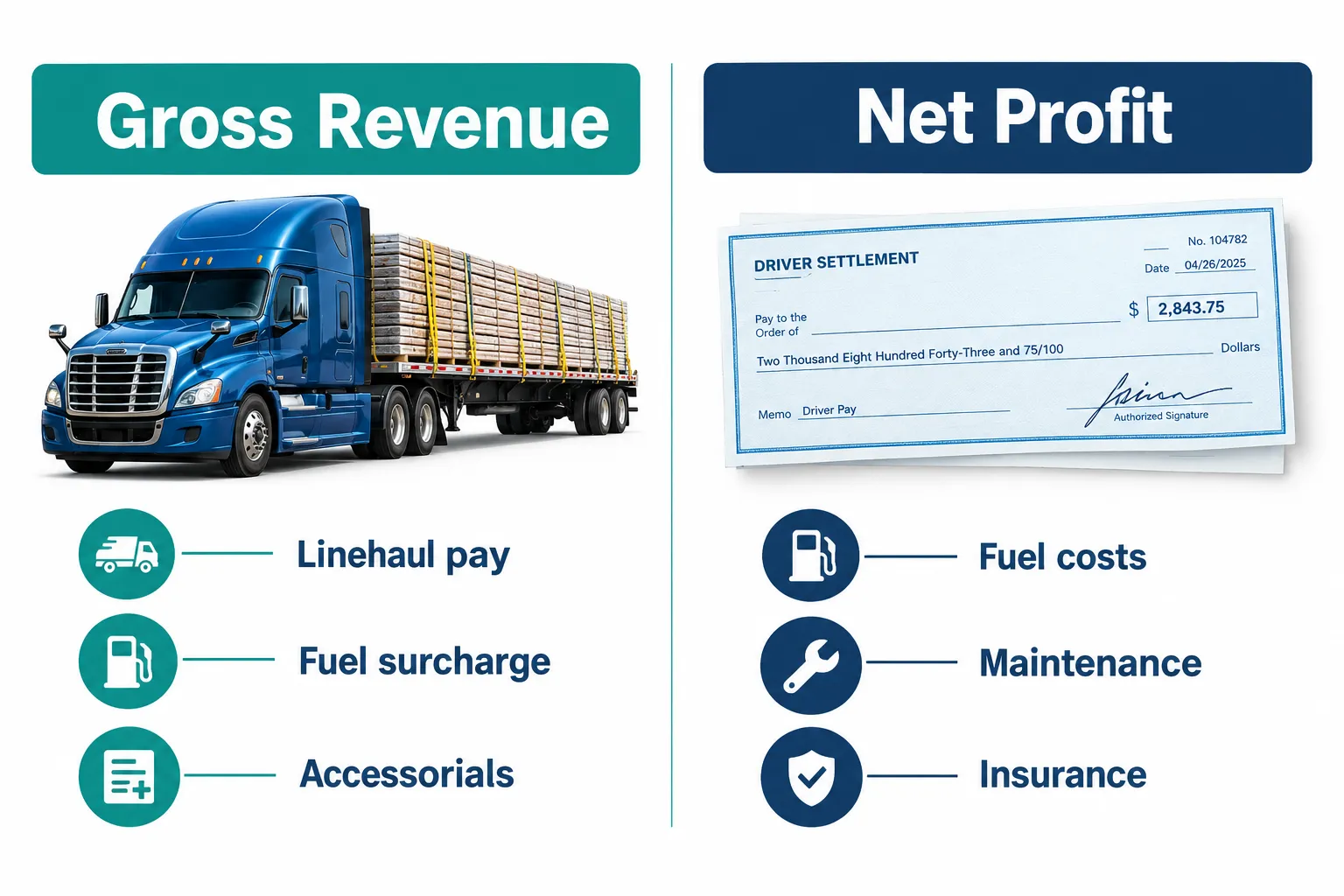
Many owner-operators focus entirely on gross revenue, the total amount of money the truck brings in. But in trucking, gross revenue is a vanity metric. What matters is net profit. In recent years, the industry has seen operating margins fall below 2% across most sectors, with some truckload carriers actually operating at a loss. To stay on the profitable side of those statistics, you must calculate your Cost Per Mile (CPM).
Your expenses fall into two categories:
Fixed Costs (Expenses you pay even if the truck sits still):
- Truck and trailer payments
- Commercial auto liability and cargo insurance
- Heavy Vehicle Use Tax (HVUT) and permits
- Parking and yard fees
- Health insurance and business software subscriptions
Variable Costs (Expenses that occur only when the truck moves):
- Diesel fuel and DEF
- Tires, brakes, and oil changes
- Tolls and scale fees
- Driver pay (if paying yourself a per-mile rate)
- Factoring fees
To find your CPM, divide your total expenses for the month by the total miles driven (including empty miles). For example, recent industry data shows the average marginal cost to operate a commercial truck hovers around $2.26 per mile. If your CPM is $2.26, and you accept a load paying $2.10 per mile, you are paying out of pocket to haul that customer’s freight.
Focus on More Profitable Freight
Profitability comes from high-margin freight, not just high gross revenue. To grow a trucking business with one truck, you must stop chasing the highest grossing loads and start analyzing the net profit of every trip.
Many new owner-operators rely entirely on spot-market load boards. While load boards are necessary when starting out, they are highly competitive and often feature the lowest-paying freight. Financial experts advise that transitioning from spot-market load boards to direct relationships with brokers, shippers, and 3PLs is required to secure the predictable revenue needed for growth.
When evaluating a load, look beyond the top-line payout. Consider the following factors:
- Deadhead Miles: How many unpaid miles do you have to drive to pick up the load? If a load pays $3.00 per mile for 500 miles, but you have to drive 150 miles empty to get there, your actual rate is $2.30 per mile across the 650 total miles.
- Weight: A load weighing 44,000 pounds will burn significantly more fuel and cause more wear on your tires than a load weighing 15,000 pounds.
- Terrain and Routing: Hauling through the mountains of Colorado or the heavy traffic of the Northeast corridor costs more in fuel, tolls, and time than driving across flat Midwestern interstates.
- Reload Potential: A high-paying load into a “dead zone” (an area with no outbound freight) is a trap. You will lose the profit you made when you are forced to deadhead 300 miles just to find your next load.
Decision Rule: Choose a lower-paying load into a strong freight market over a higher-paying load into a dead zone, provided you have a pre-planned, profitable reload waiting for you.
Reduce Your Cost Per Mile
The fastest and most reliable way to increase your profit margin without driving more miles is to lower your operational expenses. Every cent you shave off your cost per mile goes directly into your bank account.
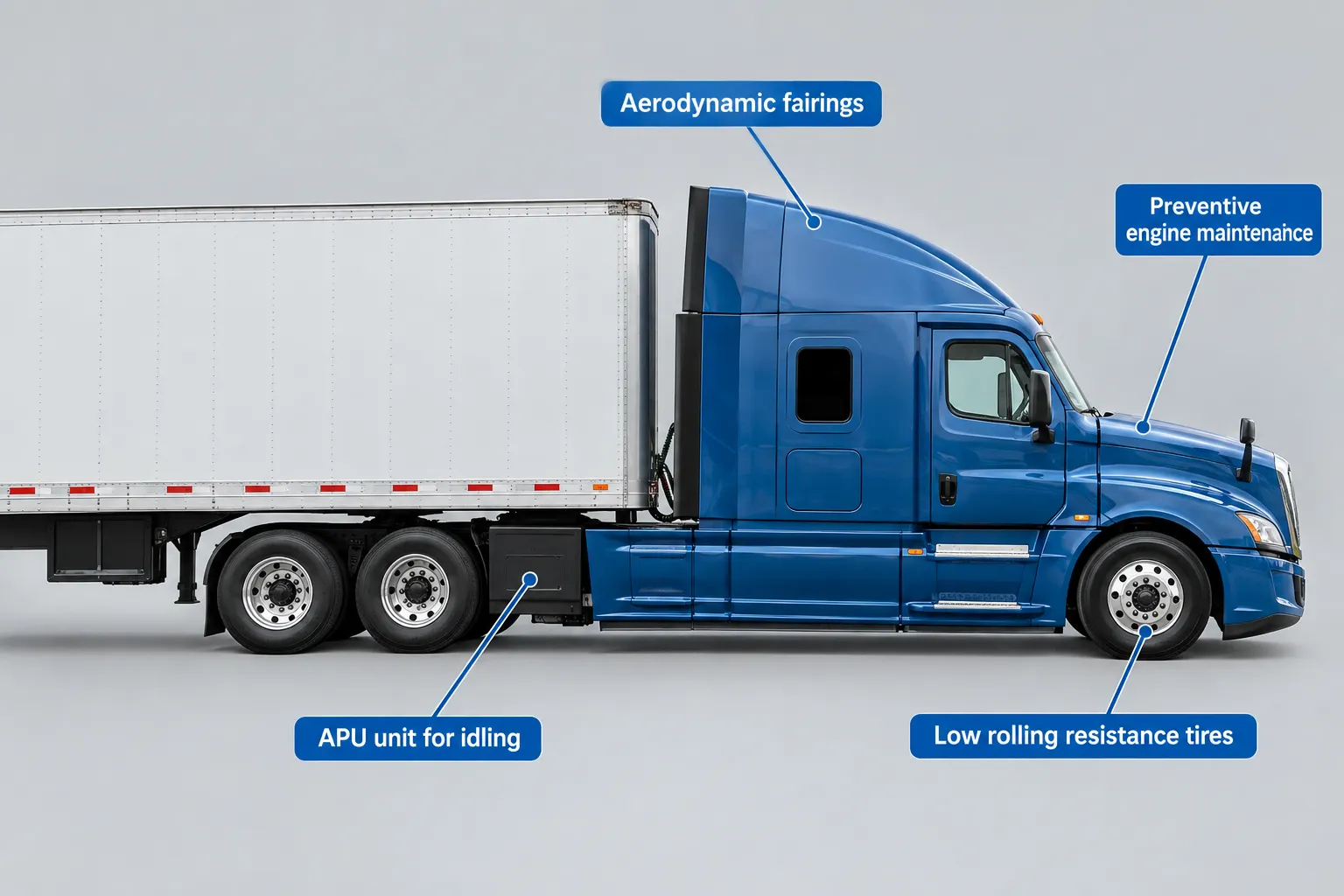
Fuel is your largest variable expense. Small changes in driving habits yield massive annual savings. Slowing down from 70 mph to 65 mph can improve fuel efficiency by up to 10%. Over the course of 100,000 miles, a 1 mpg improvement can save an owner-operator thousands of dollars a year.
Consider these practical cost-reduction strategies:
- Reduce Idling: An idling truck burns about one gallon of diesel per hour. Over a 10-hour break, that is 10 gallons of wasted fuel. Investing in an Auxiliary Power Unit (APU) or a bunk heater can pay for itself in fuel savings within a year.
- Preventive Maintenance: Do not wait for parts to break. A $50 coolant hose replacement in your driveway is much cheaper than a $1,500 tow bill and three days of downtime when that hose blows on the interstate.
- Tire Management: Check tire pressure daily. Underinflated tires decrease fuel economy and wear out faster.
- Audit Your Subscriptions: Review your recurring business costs. Are you paying for load boards you no longer use? Can you negotiate a lower factoring rate now that your business has a longer track record?
Build Repeat Customers
Reliable, recurring freight is the foundation of a stable one-truck operation. You cannot plan for growth if you do not know where your next paycheck is coming from.
Building repeat customers means identifying shippers, receivers, and brokers who need consistent capacity on specific lanes. When you run the same lanes repeatedly, you learn exactly where the cheapest fuel is, where the safe parking is, and how to price the lane perfectly.
To build these relationships, focus on exceptional service. Shippers value reliability above almost everything else. If you pick up on time, deliver on time, communicate clearly when delays happen, and keep your equipment clean, brokers and shippers will start calling you directly before they post their freight to a public load board.
However, you must manage your risk. To protect your business from sudden market shifts, industry advisors recommend you diversify your client base and ensure no single customer accounts for more than 25% of your total revenue. If your primary customer goes out of business or finds a cheaper carrier, you need to survive the loss.
Use Your Time More Efficiently
Wasted time at docks, in traffic, or waiting for loads destroys profit margins. In trucking, time literally is money. As a one-truck operation, your most limited resource is your Hours of Service (HOS).
To maximize your revenue, you must protect your driving clock aggressively:
- Avoid Chronic Delayers: Track which shippers and receivers routinely hold you at the dock for four or five hours. Unless they are paying substantial detention fees, stop hauling their freight.
- Pre-book Your Loads: Do not wait until you are empty to find your next load. Try to book your reload before you even pick up your current load. This keeps the truck moving and prevents you from sitting at a truck stop burning fuel while you negotiate rates.
- Plan Your Parking: Searching for parking at 9:00 PM wastes driving time and fuel. Plan your trip so you know exactly where you will shut down, and have a backup location in mind.
Decide Whether to Add a Second Truck
Adding a second truck multiplies your expenses instantly, so you must have cash reserves and consistent freight before expanding. Buying a second truck is the most dangerous transition an owner-operator will make.
Freight markets are highly cyclical. Data from recent years shows how quickly fortunes can change, with small fleet gross profits dropping drastically to $5,700 in late 2025 before recovering just months later. If you buy a second truck at the peak of a market cycle without cash reserves, a market downturn will wipe you out.
Before you buy a second truck, verify you meet these criteria:
- You Have the Cash: Industry advisors strongly recommend accumulating cash reserves equal to two to three months of operating expenses before purchasing a second truck. This covers the down payment, insurance down payment, initial maintenance, and the 30-to-60-day gap before the new truck’s invoices are paid.
- You Have the Freight: Do you have so much direct freight that you are currently turning down loads? If you have to put your second truck on the spot market to survive, you are not ready to expand.
- You Have Systems in Place: Scaling requires implementing repeatable fleet management systems early, including documented processes for dispatching, invoicing, maintenance, and compliance. You cannot run two trucks using a notebook and a shoebox full of receipts.
Decision Rule: Do not expand until your initial truck is running smoothly. Wait until your first truck is fully optimized and highly profitable before taking on the headache of a second truck and a hired driver.
Common Mistakes That Keep Small Trucking Businesses From Growing
Many owner-operators stall their growth by making avoidable financial and operational errors. Knowing how to grow a trucking business with one truck means knowing what traps to avoid.
- Mixing Personal and Business Finances: Paying for groceries out of your business account makes it impossible to track your true operating costs and creates a nightmare during tax season.
- Running Without an Emergency Fund: Major breakdowns happen. If a $15,000 engine rebuild will put you out of business, you are operating too close to the edge.
- Taking Cheap Freight Just to Move: Sometimes, sitting still is cheaper than taking a load that pays less than your operating cost. Don’t buy a job.
- Ignoring Compliance: Failing DOT audits, letting permits expire, or messing up your IFTA filings will result in massive fines and forced downtime.
- Treating the Broker Like an Enemy: Brokers are your sales team. Treat them with professional respect, communicate well, and they will feed you good freight.
A Simple Growth Plan for a One-Truck Operation
Follow a structured timeline to move from a struggling owner-operator to a profitable business owner. Growth should be intentional and methodical.
Step 1: Master Your Metrics
Set up proper accounting software. Track every mile, every gallon of fuel, and every expense. Calculate your exact CPM weekly.
Step 2: Optimize the Current Truck
Implement fuel-saving driving habits. Schedule all preventive maintenance. Get the truck running as cheaply and reliably as possible.
Step 3: Upgrade Your Freight
Begin transitioning away from load boards. Identify three to five solid brokers or direct shippers and build recurring lanes.
Step 4: Build the War Chest
Stop taking owner draws for unnecessary personal luxuries. Funnel all excess profit into a high-yield business savings account until you have 60 to 90 days of operating expenses saved.
Step 5: Systematize the Business
Adopt a Transportation Management System (TMS). Digitize your maintenance logs, streamline your invoicing, and ensure your compliance paperwork is flawless.
Step 6: Evaluate Expansion
Once your single truck is highly profitable, your cash reserves are full, and you are turning down excess freight from direct customers, you can begin shopping for a second truck.
Frequently Asked Questions
Can you make good money with one truck?
Yes. When managed correctly, a single truck can be highly profitable. Recent data shows the average owner-operator net income reached $64,524, with top performers earning well over six figures by controlling costs and securing direct freight.
How do I get more loads for my trucking business?
Start by providing flawless service to the brokers you currently use. Communicate proactively and ask them for dedicated lanes. Next, cold-call local manufacturing and distribution businesses in your home area to ask about their outbound freight needs.
When should I add a second truck?
You should add a second truck only when you have 60 to 90 days of operating capital saved, a documented system for maintenance and dispatch, and more direct freight than your single truck can handle.
How can I increase trucking business profits without driving more?
Reduce your cost per mile by slowing down to save fuel, reducing idle time, performing preventive maintenance to avoid costly road calls, and negotiating lower rates on your insurance and factoring services.
Is it better to grow with one truck or add trucks?
It is always better to maximize the profitability of one truck first. A single, highly optimized truck with low overhead is far less stressful and often more profitable than a poorly managed fleet of three trucks drowning in debt and repair bills.
Conclusion
Learning how to grow a trucking business with one truck is an exercise in patience, discipline, and business acumen. It is tempting to look at large fleets and assume that more trucks equal more money. But in the trucking industry, volume does not guarantee profit.
By calculating your exact cost per mile, reducing unnecessary expenses, securing reliable direct freight, and building a substantial cash reserve, you can turn a single commercial vehicle into a highly lucrative enterprise. Take the time to build a strong foundation. Master the business of running one truck today, so you have the financial strength to build an empire tomorrow.
Meta Title: How to Grow a Trucking Business With One Truck: A Practical Guide
Meta Description: Learn how to grow a trucking business with one truck. Discover practical strategies to reduce costs, find profitable freight, and prepare for fleet expansion.
Tags: how to grow a trucking business with one truck, owner operator tips, trucking business growth, cost per mile, trucking profitability, freight management, fleet expansion, trucking finance


