Moroccan preserved lemons. They sound just as exotic as Vietnamese preserved lemons, but are just as easy to make and just as versatile for even the simplest of dishes. You don’t need a tagine, nor do you even need to know how to make Moroccan food.
Once you get started, you’ll find endless uses in your everyday cooking for this aromatic version of preserved lemons.
Video Unpaused
Moroccan preserved lemons are prepared much the same way as my Vietnamese preserved lemons, but with an added step—spices. The spices give a kick to the lemon rind, the part that’s most often used (there’s not much to the pulp after a few weeks of fermentation).
What are some ways to use Moroccan preserved lemons?
Try them: slivered into salads, diced into paella (and similar rice or grain bowls), minced into tapenade, chopped and mixed into vegetable sautes, minced into sauces, dressings and marinades, or sliced thinly to go on top of fish on the grill.
The more lemons you use, the more pungent your dish will be. Go lightly! You’ll find that you can add preserved lemons almost anywhere that normally calls for fresh lemons.
To use these lemons, separate as many wedges as you need for your recipe and rinse off the excess salt. Then, remove the pulp and slice and dice the rind to your liking.
You can still use the pulp if you wish—preserved lemon wedges are great for making marinades, and you can just throw them in whole.
Save this article
Get this article sent to your inbox, plus more helpful content from Garden Betty every week.
Moroccan Preserved Lemons
Makes 1 quart
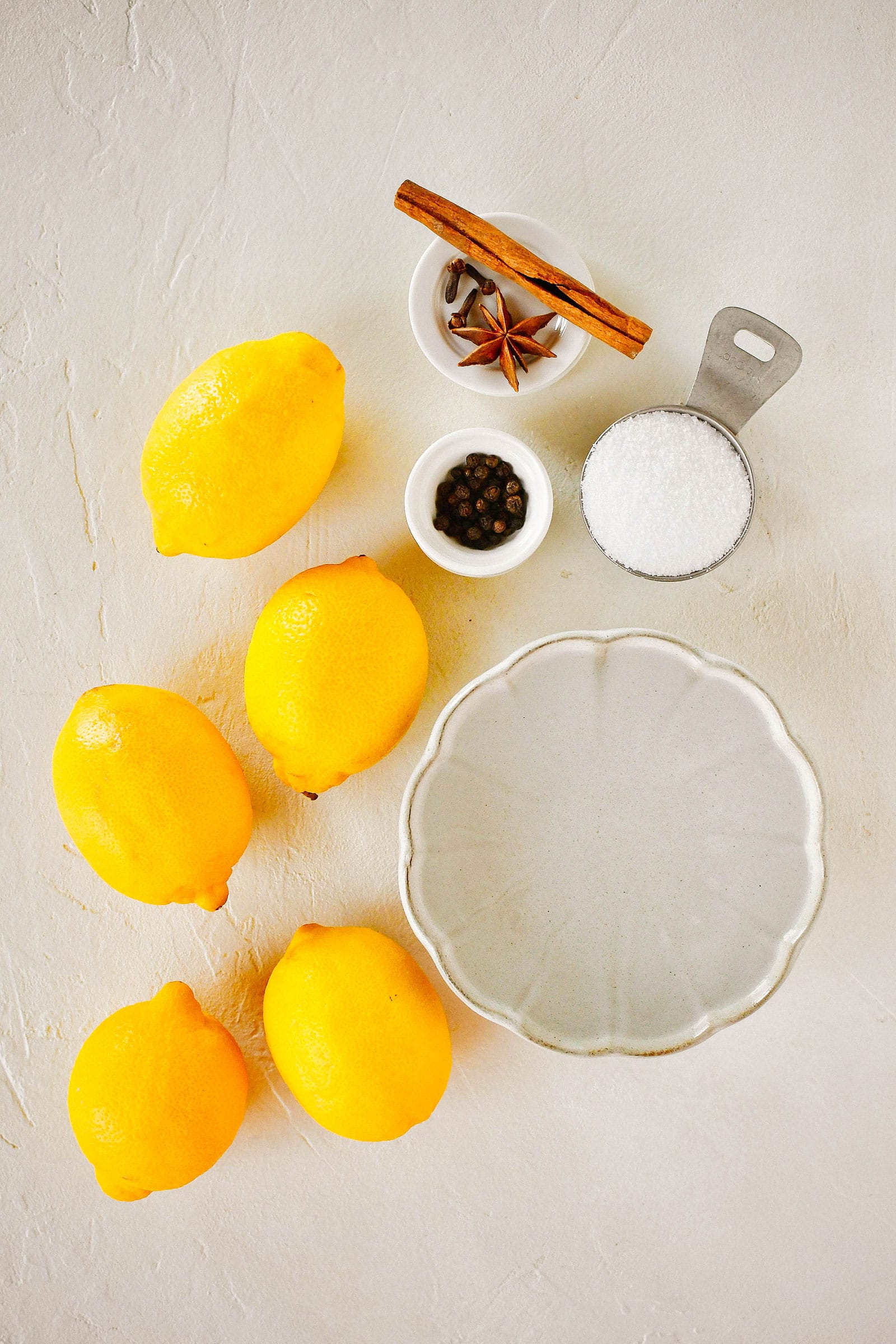
Ingredients
1 1/2 cups water
1/4 cup kosher salt, plus more to sprinkle
3 to 5 lemons (or however many will fit in your jar)
1 (3-inch) cinnamon stick
3 whole cloves
1 whole star anise
1/2 teaspoon black peppercorns
Making your preserved lemons
In a small saucepan over medium-high heat, dissolve the salt in water and then remove the brine from heat.
Wash and scrub your lemons thoroughly, removing any wax on the skin from store-bought lemons or any dirt from homegrown lemons.
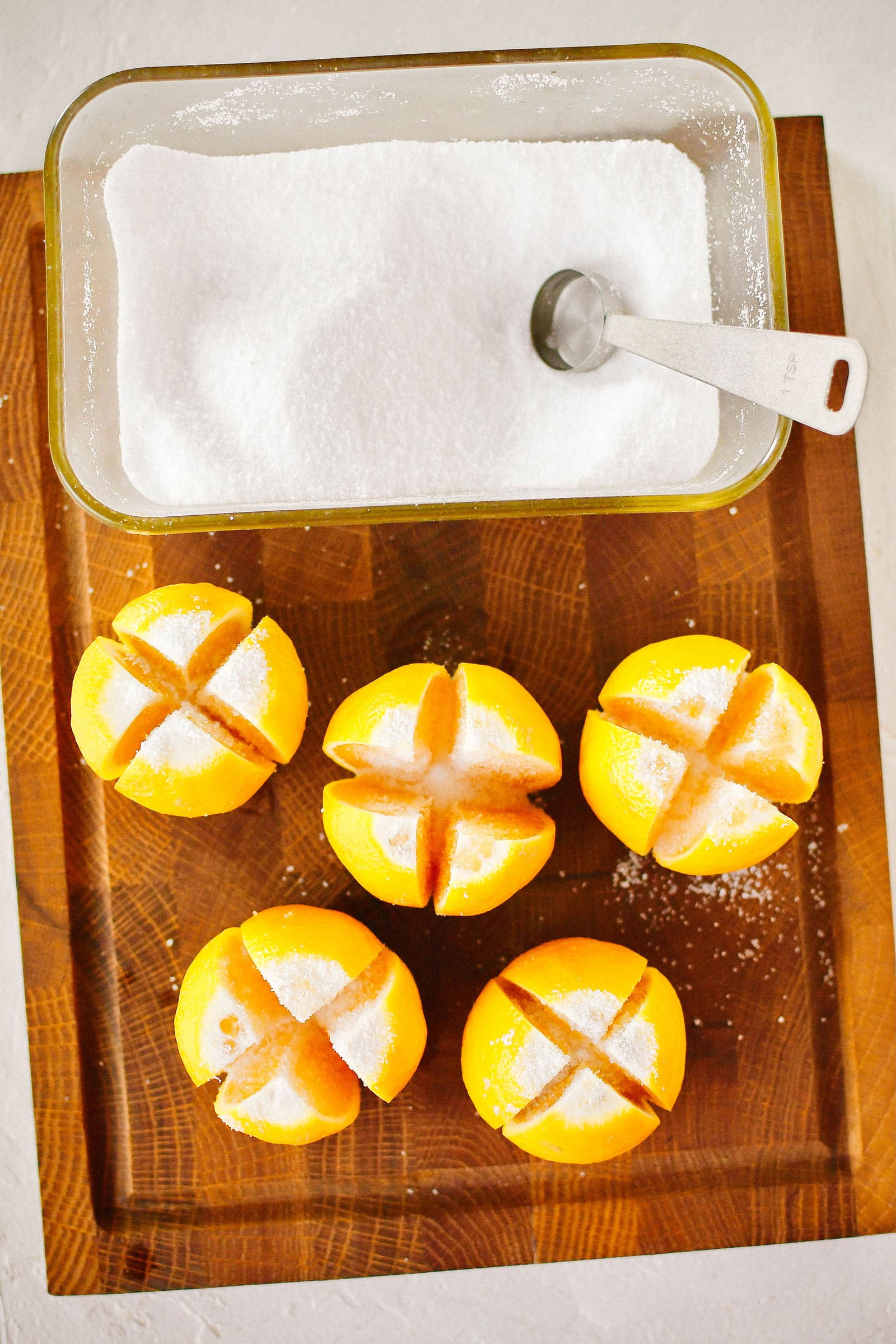
Slice off the top and bottom of the lemon. Then, slice the lemon lengthwise into quarters, but do not slice all the way through.
Liberally salt the inside of your almost-quartered wedges.
Fill your jar with a cinnamon stick, cloves, star anise, and black peppercorns. You an also add other spices if you like, such as a bay leaf or a few coriander seeds.

Pack your salted lemons into the jar, and cover them completely with brine.

To keep your lemons submerged in a widemouth jar, these are my favorite two methods:
- Wedge a 3-inch toothpick into the neck. It helps to moisten the toothpick first to make it more pliable.
- Use a glass weight (I like these ones) to hold the lemons down in the brine. This is what I most often do now, as it’s error-proof and guarantees the lemons won’t float.


Wipe any salt residue off the rim and seal the jar loosely with a lid, as you want to let the gases escape while the lemons ferment.
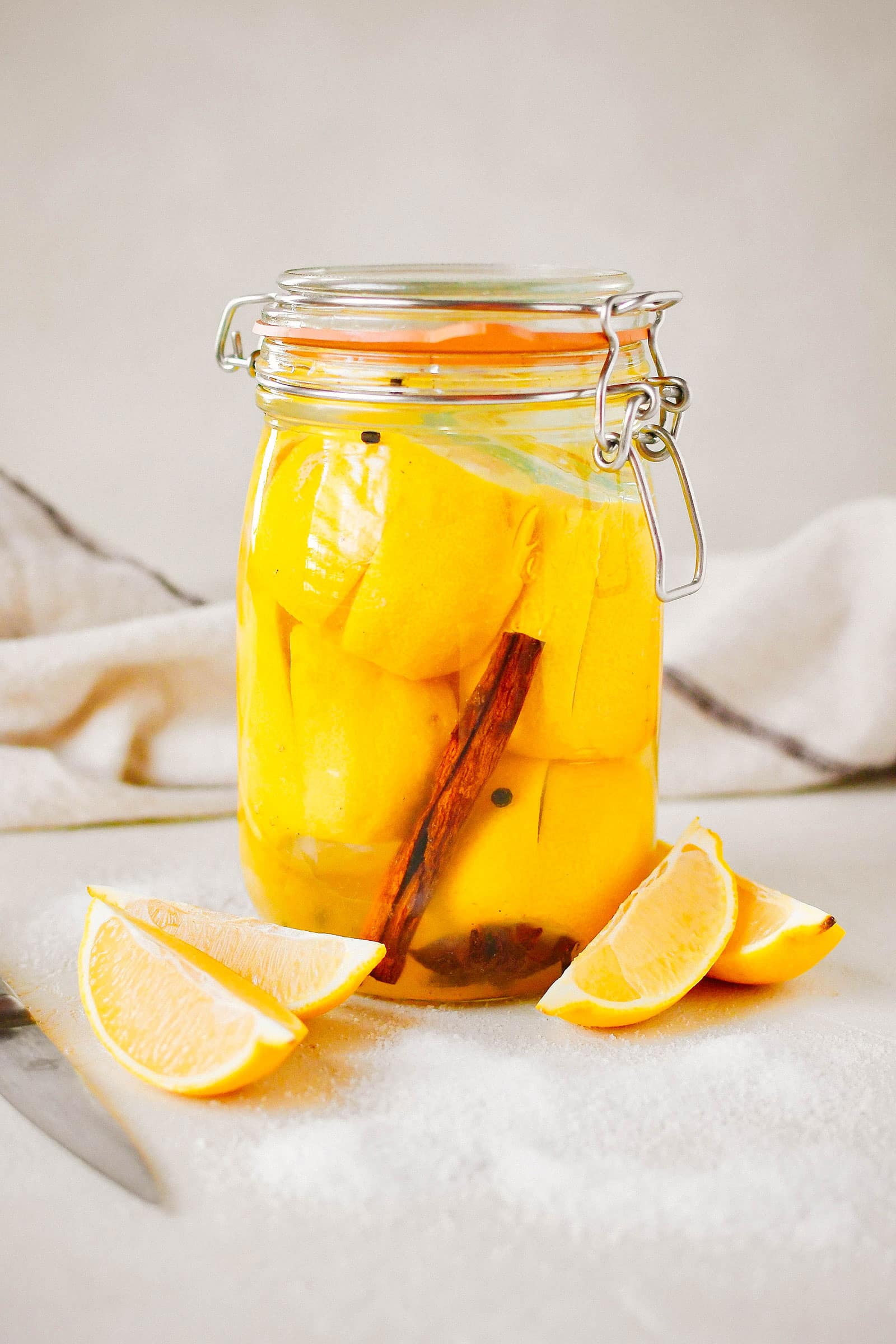
Leave the jar out at room temperature for at least three weeks. Always use a clean utensil to scoop the lemons out of the jar. They do not need to be refrigerated and will keep at room temperature indefinitely (though the lemons and brine will naturally darken over time).